
Trade Waste Monitoring Solutions That Act Early

A trade waste breach rarely begins when the laboratory report arrives. By that point, a high-strength discharge, pH excursion, hydrocarbon event or unauthorised process release may already have entered the sewer. Trade waste monitoring solutions change that operating model by measuring critical conditions continuously at the discharge point and transmitting actionable data before a short-duration event becomes a compliance, treatment or reputational problem.
For utilities and industrial operators, the objective is not simply to collect more readings. It is to establish defensible visibility over what is entering the network, when it occurs, how long it persists and whether the discharge complies with site limits and trade waste agreements.
Why periodic sampling leaves critical gaps
Manual sampling remains necessary for laboratory verification and parameters that cannot be reliably measured in situ. However, a grab sample is a snapshot. It can miss intermittent cleaning cycles, batch discharges, overnight releases and process upsets that occur between inspections.
This limitation matters because many trade waste risks are transient. A single tanker unloading error, a failed chemical dosing system or a washdown event may alter discharge quality for only minutes or hours. If the event happens outside a sampling window, the available record can suggest normal operation while the sewer network has experienced a significant load.
Continuous monitoring adds the missing time dimension. It creates a high-resolution operating record that can be assessed against discharge limits, production schedules, rainfall, pump activity and treatment plant performance. For the industrial site, this helps isolate the source of an excursion. For the utility, it supports proportionate enforcement, network protection and more informed capacity planning.
What trade waste monitoring solutions need to measure
The correct monitoring configuration depends on the industry, approval conditions, discharge pathway and known risk profile. There is no universal instrument package. A food processor, metal finishing operation, hospital, chemical manufacturer and commercial laundry can each present very different wastewater characteristics.
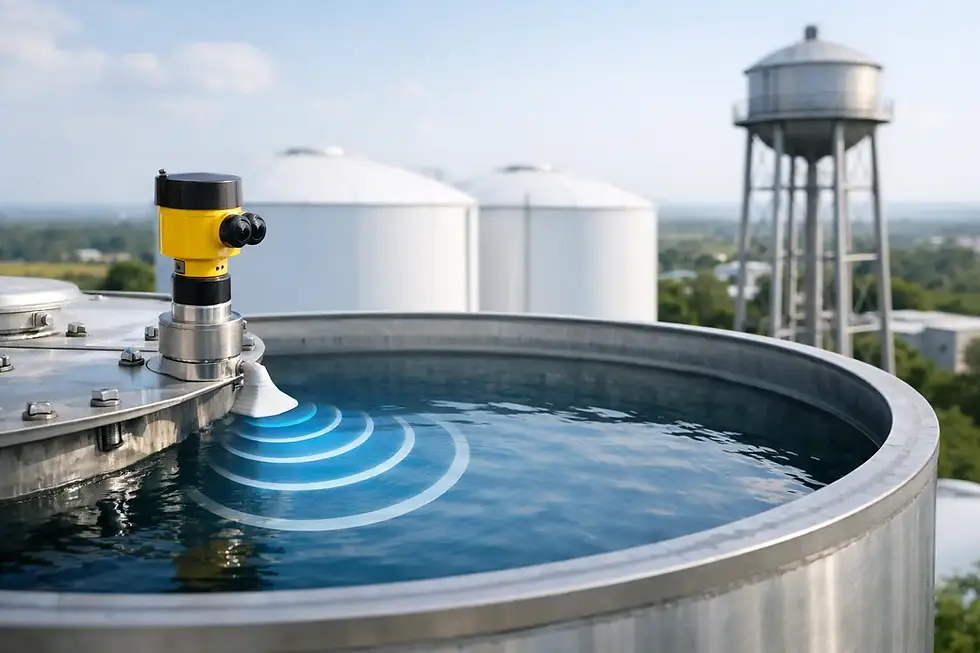
At a minimum, flow is commonly required to establish discharge volume, loading trends and unusual patterns. Flow data is particularly valuable where charges, consent conditions or downstream capacity are linked to volume. Non-contact radar level sensors, area-velocity instruments and solar-powered remote flow meters can be selected according to pipe geometry, channel conditions, access constraints and the presence of suspended solids.
Water quality monitoring may include pH, electrical conductivity, temperature, dissolved oxygen, turbidity and oxidation-reduction potential. These parameters provide immediate operational signals. A sudden pH shift may indicate chemical contamination or neutralisation failure. Elevated conductivity can reveal concentrated process water or saline intrusion. Turbidity trends can identify solids carryover, while dissolved oxygen and oxidation-reduction potential can assist in identifying biologically active or chemically reducing discharges.
Some applications require additional sensing or automated sampling for parameters such as chemical oxygen demand, biochemical oxygen demand, fats, oils and grease, metals, ammonia or specific industrial contaminants. These cannot always be inferred reliably from field measurements alone. The practical approach is to use continuous surrogate parameters to identify an event, then trigger an autosampler or investigation process that produces a laboratory-confirmed result.
The monitoring point is as important as the sensor
A high-quality analyser installed at the wrong point will still produce poor operational intelligence. The preferred location is generally a representative, accessible and secure point after relevant on-site treatment but before the discharge enters the utility sewer. The monitoring point must avoid stagnant zones, uncontrolled dilution, backwater effects and locations where sediment accumulation compromises sensor performance.
Site assessment should also consider hydraulic range, access for calibration, electrical availability, communications coverage, safe isolation and confined-space requirements. In harsh sewer and industrial environments, enclosure design, mounting method and fouling management are not secondary details. They determine whether a monitoring system remains available long enough to deliver useful data.
From readings to operational intelligence
A useful system does more than display a graph. It applies data validation, alarm logic, event classification and remote visibility so operators can act with confidence. Cloud-based monitoring platforms allow authorised teams to review current conditions, historical trends and alarm status across multiple sites without waiting for field crews to retrieve data.
Alarm design requires engineering judgement. A fixed high-pH alarm, for example, is useful but incomplete. Better control logic can consider duration, rate of change, time of day, flow volume and multiple parameters together. A brief spike caused by sensor cleaning should not generate the same response as a sustained excursion accompanied by elevated flow and conductivity.
This is where continuous data provides practical value. Operators can set escalating alerts: an advisory notification for an emerging trend, an urgent alarm for an approval-limit breach and a critical escalation where an event persists or coincides with conditions that threaten downstream assets. Notifications can support rapid investigation while the process evidence is still available.
Secure cloud records also improve reporting. Rather than manually assembling spreadsheets from disconnected instruments and laboratory sheets, teams can review traceable time-series data, event histories and site performance trends. This supports compliance submissions, internal audits, capital planning and discussions between facilities, consultants and utility authorities.
Designing a field-proven monitoring architecture
Trade waste sites often combine difficult hydraulics with corrosive atmospheres, high solids, variable flows and limited communications. The system architecture must therefore be selected for field conditions rather than laboratory specifications alone.
Autonomous analysers reduce dependence on frequent manual testing by performing programmed measurements at the site. Wireless telemetry transmits results to a central platform, while solar power can extend monitoring to locations where mains power is unavailable or expensive to install. Where level conditions or surcharge risk matter, radar level sensing can complement flow and quality measurements to identify blockage, backflow or overflow precursors.
Reliability also depends on maintenance planning. Sensors exposed to trade waste may require cleaning, calibration and consumable replacement at intervals determined by the wastewater matrix. Highly fouling effluent may justify automatic cleaning, protective flow cells or more frequent field servicing. Lower-maintenance deployments can be appropriate for stable, well-treated discharges. The decision should be based on evidence from the site, not an assumed maintenance interval.
Communications resilience is equally important. Buffered local storage protects the monitoring record during temporary network outages, while remote diagnostics can flag power loss, instrument drift, communications failure or abnormal sensor response. A monitoring system that reports its own health gives operations teams a clearer distinction between a genuine process event and an instrument issue.
TracWater India applies this autonomous, cloud-connected approach to distributed water infrastructure, combining field-proven sensing platforms with remote data services and engineering support. For trade waste applications, the outcome is a monitoring network that can scale from a high-risk discharge point to a portfolio of industrial sites.
Choosing the right deployment model
The best deployment model depends on the consequence of failure and the maturity of the site’s existing controls. A high-risk industrial discharge may require continuous multi-parameter measurement, flow metering, automated sampling and immediate alarm escalation. A lower-risk site may begin with continuous flow and pH monitoring to establish baseline behaviour before adding further parameters.
Pilot deployments are often valuable where wastewater characteristics are uncertain. A well-designed pilot can answer practical questions: Which parameters correlate with process upsets? How quickly do they change? Does the monitoring point remain representative across low and peak flows? What servicing regime is realistic? These findings make the subsequent rollout more defensible and reduce the chance of specifying unnecessary instrumentation.
Utilities should also distinguish between compliance monitoring and network intelligence. Compliance monitoring establishes whether an individual customer meets discharge conditions. Network intelligence examines cumulative effects across catchments, such as peak load, corrosive conditions, odour precursors or repeated surcharging. The same cloud platform can support both objectives, but the alarm thresholds, reporting formats and sensor locations will differ.
Turning data into better control
Monitoring data has most value when it is connected to a defined response process. Every significant alarm should have an owner, an escalation path and a documented action. For an industrial operator, that may mean checking a neutralisation plant, isolating a process line or suspending washdown. For a utility, it may mean contacting the customer, inspecting the receiving sewer or deploying targeted sampling.
Trend analysis can also reveal problems that remain below a formal limit. Gradual increases in conductivity, declining dissolved oxygen or a shifting daily flow profile may indicate a process change, treatment deterioration or unauthorised connection. Acting on these early indicators is usually less disruptive and less costly than responding to a confirmed breach.
The practical test for any trade waste monitoring solution is simple: can it provide reliable evidence quickly enough for people to protect the sewer, the treatment plant and the environment? When continuous measurement, validated alarms and clear operational ownership are designed together, monitoring becomes an active control measure rather than a passive compliance record.



Comments