
Cloud Water Data Platforms for Utilities

A burst main, rising sewer level or sudden deterioration in treated-water quality does not wait for the next manual sampling round. Cloud water data platforms give operations teams a current view of distributed assets by converting autonomous field measurements into time-stamped, accessible and actionable operational intelligence.
For utilities, industrial sites and environmental monitoring programmes, the platform is not simply a place to display charts. It is the operational layer that connects field instrumentation, communications, analytics, alarms and engineering decisions. When designed around water infrastructure realities, it helps teams identify exceptions early, verify field conditions remotely and build a defensible record of network performance.
What cloud water data platforms actually do
A cloud water data platform receives measurements from instruments installed across a network, stores them securely and presents the information through dashboards, maps, trends and alert workflows. Inputs may include water quality parameters, pressure, transient pressure, flow, level, rainfall, groundwater level and system status. The value lies in correlating those inputs across time and location rather than viewing each measurement as an isolated reading.
For example, a pressure monitor may record an unusual transient event at the same time that a district meter detects a flow change. A platform can place both events in their operational context, allowing engineers to investigate a possible burst, valve operation or pump-related pressure surge. Similarly, an elevated turbidity reading downstream of a treatment asset has far greater meaning when considered alongside flow, chlorine residual, rainfall and upstream water quality trends.
This changes the monitoring model. Instead of relying on periodic site visits and spreadsheets assembled after the event, operators can work from continuous evidence. That distinction is material where public health, environmental compliance, asset protection or production continuity is at stake.
Why cloud water data platforms matter in distributed networks
Water assets are geographically dispersed, frequently difficult to access and often operate without a permanent on-site team. Reservoirs, pump stations, trunk mains, sewer manholes, monitoring bores and discharge points can sit kilometres apart. Sending personnel to inspect every asset at a fixed interval is expensive, slow and unlikely to capture short-duration events.
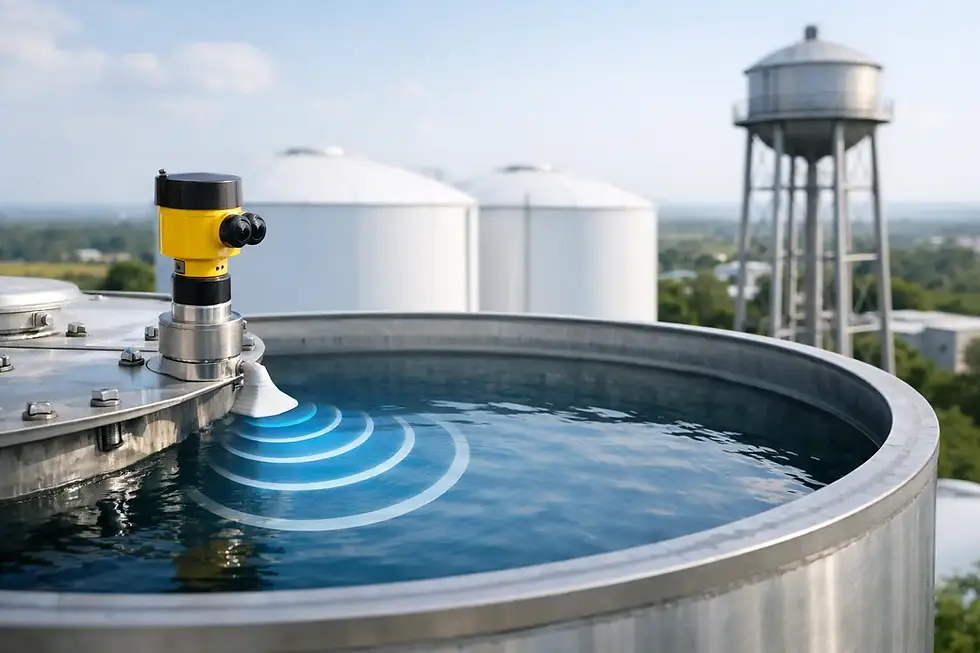
Cloud-based monitoring extends operational visibility to these remote locations. Solar-powered flow meters, radar level sensors, wireless groundwater instruments, instrumented buoys and autonomous water quality analysers can transmit measurements at configured intervals. The platform centralises this data so authorised users can view the same current condition from the control room, office or field mobile device.
However, cloud connectivity alone is not the outcome. A system that sends thousands of readings without meaningful alarm logic can create noise rather than intelligence. The platform must distinguish normal operating variation from conditions that require investigation. This is where thresholds, rate-of-change rules, persistence checks, asset-specific operating bands and alarm escalation become essential.
Continuous monitoring improves event capture
Manual grab samples remain useful for laboratory verification and parameters that require specialist analysis. They are not a replacement for continuous sensing where conditions can change between visits. A short contamination episode, a pressure transient lasting seconds or a sewer surcharge developing after intense rainfall may be completely missed by an intermittent programme.
Continuous measurement provides the temporal resolution needed to understand event onset, peak severity and recovery. That evidence supports quicker intervention and makes post-event analysis more reliable. It also reveals recurring patterns, such as overnight pressure fluctuations, wet-weather infiltration or process-related trade waste excursions, that a single sample cannot establish.
One operational view reduces fragmented decision-making
Many organisations hold water information across SCADA systems, laboratory information systems, maintenance applications and manually maintained records. Each serves a purpose, but fragmentation slows decision-making. Cloud water data platforms can provide a common visual layer for selected live measurements and historical records, with geospatial views that show where exceptions are occurring.
The practical benefit is coordination. Operations staff can see an alarm, maintenance teams can confirm the asset location and condition, and compliance personnel can review the associated data history. Integration requirements vary by organisation, particularly where existing control systems have strict cyber security and governance controls. The right approach is usually controlled data exchange, not replacing every existing system.
The field-to-cloud architecture that determines reliability
Platform performance begins at the sensor, not at the dashboard. Water infrastructure environments introduce fouling, moisture ingress, corrosive gases, variable power availability, intermittent communications and physical access constraints. Hardware selection, installation quality and maintenance planning directly affect the quality of cloud intelligence.
A capable architecture has four connected layers: field sensing, local logging, communications and cloud analytics. At the field layer, instruments must be suited to the parameter and environment. An open-channel sewer flow application has different requirements from a treated-water distribution main or groundwater bore. Local data logging protects measurement continuity during temporary network outages, while communications return stored records once a connection is restored.
At the cloud layer, incoming data should be checked for plausibility, device status and communication health. A flatline value may indicate a stable process, but it may also indicate a fouled probe or failed instrument. Battery condition, solar charging status, enclosure access and signal strength are therefore operational data, not minor technical details. A platform should make these diagnostics visible before data loss becomes a field emergency.
TracWater India applies this field-to-cloud model through autonomous monitoring systems that combine sensing technology, remote transmission and cloud-based Information-as-a-Service delivery. The objective is practical: place reliable intelligence in front of operators without creating an unsustainable manual servicing burden.
From dashboards to actionable alarms
A useful dashboard answers a defined operational question. Is reservoir level approaching a critical limit? Has pressure dropped below the acceptable band in a district metered area? Is a discharge quality parameter moving outside the site licence condition? Generic visualisation is rarely enough for these decisions.
Alarm configuration should reflect the asset's operating context. A fixed high-level alarm may suit a storage tank, while a sewer network may require level rise rate, rainfall correlation and duration above a threshold. Water quality alarms may need a combination of absolute value, deviation from a rolling baseline and confirmation from a second parameter to avoid unnecessary call-outs.
Escalation also needs discipline. An alarm that is sent to everyone is often acted on by no one. Clear ownership, notification channels, acknowledgement requirements and response procedures convert alerts into action. For critical infrastructure, teams should test the entire chain: instrument detection, transmission, platform processing, notification receipt and field response.
Data quality and cyber security are operational requirements
Cloud platforms are sometimes evaluated for interface appearance before data governance is addressed. That is backwards. Poor-quality data can lead to poor operational decisions, regardless of how polished the dashboard appears. Measurement records need timestamps, calibration history, maintenance annotations, instrument identifiers and clear flags for suspect or missing values.
Data retention and reporting also matter. Utilities and industrial operators may need to demonstrate compliance over months or years, investigate an incident or compare performance before and after a network intervention. Exportable records, auditable alarm histories and consistent time-series storage make that work substantially more efficient.
Cyber security must be considered across the entire deployment. This includes authenticated users, role-based access, encrypted communications where applicable, secure device configuration, controlled integration points and processes for software updates. The level of control should match the criticality of the asset and the organisation's information security framework. A platform connected to operational technology deserves the same engineering scrutiny as the field instrument itself.
Selecting a platform for a water monitoring programme
The best platform depends on the monitoring objective. A compliance programme may prioritise validated records, reporting and parameter traceability. A leakage and pressure-management programme may need high-frequency data, transient capture and event correlation. Environmental surveillance may place greater emphasis on solar autonomy, communications resilience, geospatial mapping and long-term deployment in remote locations.
Before procuring technology, define the decision each measurement is intended to support. Then establish the required parameters, sampling interval, acceptable alarm latency, communications coverage, power constraints, user roles and maintenance model. These questions prevent a common failure mode: deploying capable instruments without a clear process for acting on what they report.
Pilot deployments are valuable when they are structured to test field conditions, data completeness, alarm relevance and operational response. They should not be treated only as a hardware trial. A successful pilot proves that the full monitoring workflow works under real conditions, from installation through to an engineering decision.
A platform should make the next decision clearer
The practical measure of a cloud water data platform is not the number of connected devices or the volume of data retained. It is whether the platform helps a responsible operator act earlier and with greater confidence when network conditions change. Build the programme around that decision, and each sensor, alarm and dashboard has a defined operational purpose.



Comments