
Remote Flow Meter for Water in Smart Networks

A remote flow meter for water is not simply a digital replacement for a mechanical totaliser. For network operators, it is a field-deployed intelligence point that continuously reports how water is moving through a district metered area, treatment outlet, reservoir zone, industrial process line or remote distribution asset. When flow data is transmitted alongside pressure, level, valve status or quality parameters, operators can identify abnormal conditions before they become customer complaints, production losses or compliance issues.
Manual reads still have a role in verification and site inspection, but they cannot explain what happened between visits. A transient overnight leak, unauthorised draw-off, pump control issue or intermittent burst can remain invisible for days. Remote measurement changes that operating model by providing time-stamped, cloud-accessible evidence from distributed assets.
What a remote flow meter for water measures
At its core, a remote flow metering system measures flow rate and accumulated volume, then transmits that information through a communications network to a secure cloud platform. Depending on the meter and installation, the system may also capture pressure, temperature, battery condition, enclosure status and diagnostic information.
The most suitable sensing principle depends on the application. Electromagnetic flow meters are commonly selected for conductive water and wastewater because they have no moving parts in the flow path and can support high-accuracy measurement. Ultrasonic meters can provide clamp-on or inline measurement where pipe access, installation time or shutdown constraints influence the design. Mechanical meters remain appropriate in selected clean-water applications, although wear, debris sensitivity and long-term maintenance requirements must be assessed.
For a utility, the value is not limited to the reported litres per minute or kilolitres per day. The operational value comes from recognising the relationship between flow, time, pressure and location. A sustained increase in minimum night flow may indicate leakage. A sudden flow increase with a corresponding pressure drop may indicate a burst. Zero flow during an expected production period can indicate a blocked line, pump failure, closed valve or telemetry issue requiring investigation.
From field measurement to operational intelligence
A capable remote flow meter architecture has four connected layers: the meter and sensors, a low-power telemetry device, the communications path, and a cloud data environment. Each layer needs to be engineered for the site rather than treated as an afterthought.
At the field layer, installation quality determines whether the data can be trusted. Pipe material, nominal diameter, available straight lengths, air entrainment, sediment, flow profile, access constraints and flooding risk all affect meter selection and placement. A meter installed downstream of turbulent fittings or in a pipe that does not remain full may deliver a reading, but not necessarily a reading suitable for water-balance or billing decisions.
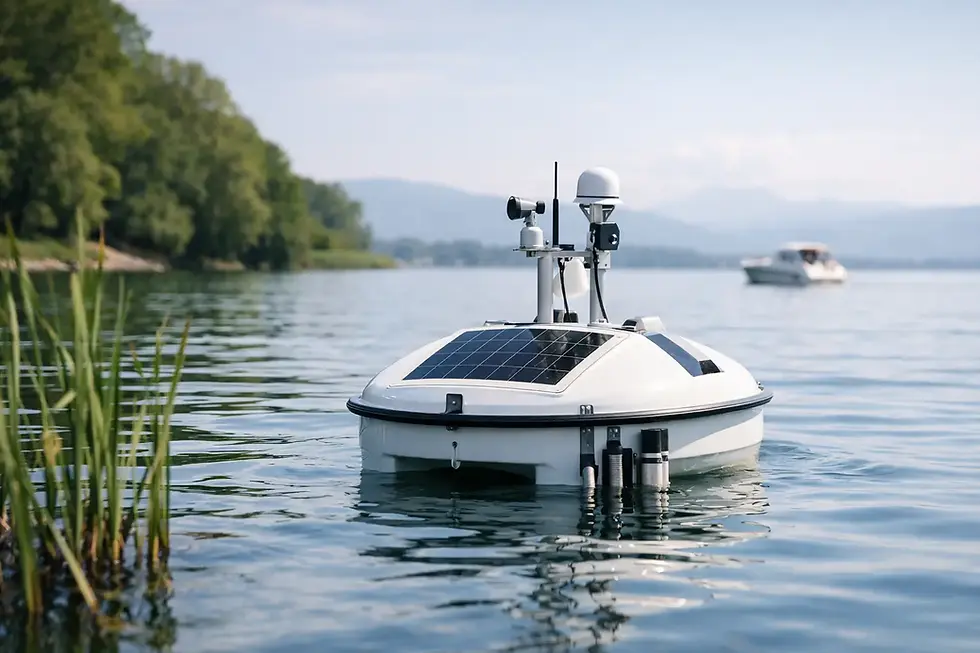
The telemetry layer must support the required reporting interval without compromising power autonomy. A solar-powered remote flow meter is particularly useful at chamber sites, irrigation infrastructure, rural transfer mains and environmental assets where mains power is unavailable or unreliable. Battery-only operation can also be effective where transmission frequency is modest and site conditions suit long-life deployment. The correct choice depends on data frequency, signal availability, local climate, enclosure design and maintenance access.
Cloud software then turns the raw reading into usable information. Operators should be able to view current and historic flow, compare sites, map asset locations, configure alert thresholds and export data for analysis or reporting. For larger deployments, application programming interfaces and integration with SCADA, GIS, billing platforms or asset management systems may be required. A dashboard that only displays charts is useful; a platform that supports alarm workflows, trend analysis and network decisions is materially more valuable.
Where continuous flow monitoring delivers results
District metered areas are a primary application. Incoming flow data, paired with pressure measurement and known customer demand, provides a stronger basis for water-balance analysis and non-revenue water programs. Rather than dispatching crews based on anecdotal reports, operations teams can prioritise zones where the pattern indicates a credible loss event.
At treatment plants and service reservoirs, remote flow monitoring confirms production, transfer and outlet volumes across the network. This helps operators reconcile treated water against distributed water, identify unexpected transfer behaviour and assess whether pumping schedules are achieving the intended result. In systems with multiple pressure zones, the data can also support pressure management strategies that reduce stress on ageing mains.
Industrial facilities use remote meters to monitor process water, raw water intake, bore supply, cooling systems, wastewater flows and trade waste discharge. Continuous records provide a defensible operational history, particularly where discharge limits, internal allocation or production-related consumption must be monitored. The right design may include flow-paced sampling, quality sensors or level data where a single flow signal does not fully explain site performance.
For irrigation and remote supply assets, flow intelligence helps verify delivery volumes, detect pipeline losses and manage intermittent operation. In environmental monitoring programs, measured flow adds essential context to water-quality readings. A conductivity or turbidity change has a different operational meaning during low flow than during a high-flow event.
Selecting the right system for the site
The first question is not which communications technology is available. It is what decision the measurement must support. Leakage detection, custody transfer, production control, compliance reporting and remote asset verification each impose different expectations for accuracy, logging frequency, alarm latency and auditability.
Start by defining the expected minimum, normal and peak flow range. An oversized meter can lose resolution at low flows, while an undersized meter may create unacceptable head loss or operate outside its certified range. Pipe material and internal condition matter as well. Corroded, lined or partially filled pipes can complicate some measurement approaches.
Then assess the installation environment. Below-ground chambers require attention to moisture ingress, condensation, confined-space access and radio signal strength. Above-ground installations may need UV-resistant enclosures, thermal management, tamper resistance and appropriate cable protection. Wastewater sites introduce additional considerations, including ragging, corrosive gases, solids and cleaning access.
Data design deserves equal attention. A five-minute interval can be appropriate for burst detection and pressure-event analysis, while hourly data may suit a low-risk rural supply point. More frequent reporting improves visibility but increases communications and power demand. Alert logic should also be based on hydraulic behaviour, not only fixed limits. For example, a threshold that works during daytime demand may produce false alarms overnight or during scheduled pumping.
Avoiding common deployment failures
Remote metering projects often underperform because the engineering focus stops at device installation. A flow meter can be accurate, powered and connected yet still fail to provide an actionable outcome if alarm rules are unclear, data ownership is fragmented or no team is responsible for responding to exceptions.
Commissioning should therefore include physical verification, communications testing, time synchronisation, baseline data review and comparison against a known reference where practical. The first weeks of data are valuable for establishing normal operating patterns. This is when teams can identify recurring pump cycles, demand peaks, legitimate night use and pressure-flow relationships before configuring critical alarms.
Security and resilience also require practical treatment. Field devices should use managed communications, secure data transmission and controlled user access. Cloud platforms need appropriate permissions, audit trails and reliable data retention. For critical assets, consider what happens during a communications outage: the device should continue logging locally and backfill the stored records once the connection is restored.
Maintenance should be planned around the full system, including sensor condition, enclosure integrity, solar panel cleanliness where fitted, antenna performance and calibration requirements. Autonomous monitoring reduces routine site visits, but it does not eliminate asset stewardship.
Building a scalable monitoring program
The most effective programs begin with a defined operational problem and expand from verified results. A pilot across several contrasting sites can establish the preferred meter type, reporting interval, mounting arrangement and alarm process. It can also expose practical issues such as poor network coverage, inaccessible chambers or unexpected hydraulic behaviour before a wider rollout.
Once the data model and response process are proven, the same cloud architecture can scale across treatment outlets, pressure zones, bulk meters, and industrial assets. TracWater India applies this approach through field-proven sensing, autonomous telemetry and cloud-based operational intelligence designed for distributed water infrastructure.
A remote flow meter is most valuable when it becomes part of an operating discipline: measure continuously, compare patterns, investigate exceptions and use confirmed evidence to direct field resources. That is how a flow signal becomes a practical tool for reducing losses, protecting supply and making infrastructure decisions with greater confidence.



Comments