
Autonomous Water Quality Analyser in Practice

A failed residual disinfectant reading, a sudden turbidity increase or an industrial discharge event rarely occurs at the same moment a field team arrives for a scheduled sample. An autonomous water quality analyser closes that visibility gap by measuring at the asset, transmitting results to the cloud and alerting operators while there is still time to intervene.
For utilities, industrial operators and environmental agencies, the operational shift is significant. Instead of making decisions from isolated laboratory results or periodic handheld checks, teams can see how water quality behaves through the day, across changing demand, rainfall, pumping cycles and process conditions. The objective is not simply more data. It is actionable intelligence tied to a clear operational response.
What an Autonomous Water Quality Analyser Does
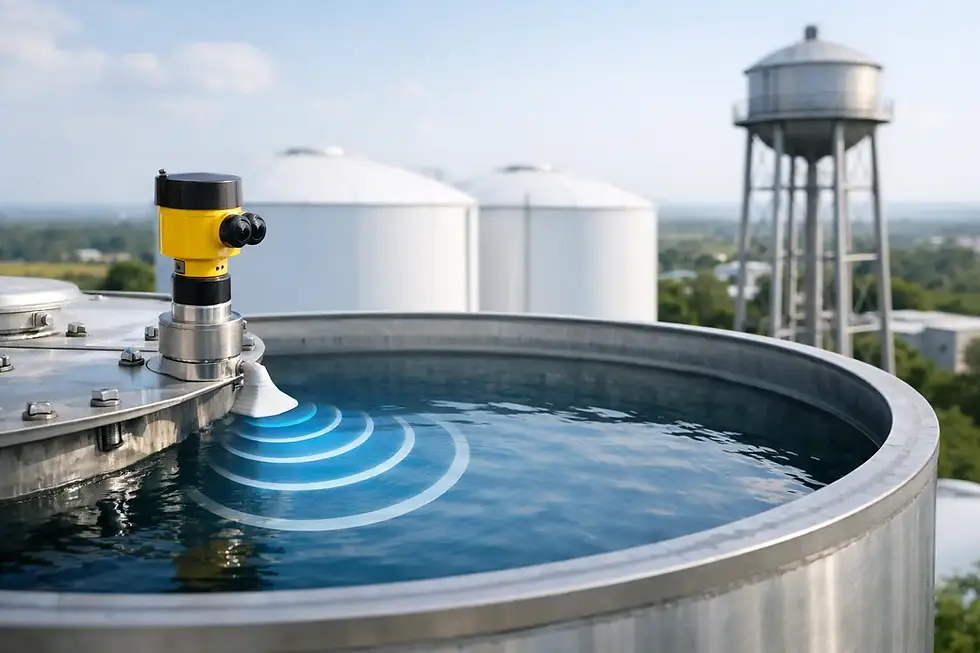
An autonomous analyser is a field-deployed monitoring system designed to collect, process and communicate water-quality measurements with minimal routine attendance. It combines sensing hardware, onboard control, communications, power management and cloud software into a single monitoring architecture.
Depending on the application, the platform may measure temperature, pH, electrical conductivity, dissolved oxygen, oxidation-reduction potential, turbidity, chlorophyll, blue-green algae indicators or other application-specific parameters. Some deployments use multi-parameter sondes for broad water characterisation; others require an analyser configured around a critical compliance or process parameter. The correct selection depends on the risk being managed, not on the longest possible parameter list.
The autonomous element matters because it removes the dependence on a person being present to capture every reading. Measurements can be logged at defined intervals, checked against configured thresholds and sent through secure wireless communications to a cloud platform. Operators can then review trends, map distributed sites, acknowledge alarms and export evidence for reporting or engineering analysis.
This does not eliminate the need for field work. Calibration, validation, cleaning and maintenance remain essential, particularly where biofouling, sediment loading, oils or aggressive wastewater are present. It changes field work from broad manual sampling rounds to targeted maintenance and investigation based on what the network is reporting.
Why Continuous Measurement Changes Water Operations
A manual sample provides a valid result for one place and one moment, assuming the sample is collected, preserved and analysed correctly. It cannot show what happened before or after that moment. For systems affected by intermittent contamination, batch discharges, stormwater ingress or variable source-water quality, this limitation can be material.
Continuous monitoring establishes a time series. That allows operators to distinguish a genuine event from normal variation, correlate a change with a pump start, rainfall event or treatment adjustment, and verify whether corrective action has worked. A conductivity increase at an environmental site, for example, may be a short-lived tidal influence, an upstream release or a sensor issue. Context from adjacent parameters and trend history is what makes the measurement useful.
For potable networks, this intelligence supports early detection of conditions that may require investigation. At treatment plants and reservoirs, it can reveal process variation before it becomes a customer complaint or compliance concern. In wastewater systems, it can identify trade waste changes, aeration performance issues or conditions associated with sewer overflows. Industrial facilities can use the same capability to protect intake water quality, manage process water and demonstrate discharge oversight.
The economic case is usually strongest at remote, high-consequence or operationally variable sites. A stable, accessible asset with low risk may still be managed effectively with periodic manual testing. A remote river intake, an unmanned reservoir, a discharge point or a network extremity with recurring complaints is a different proposition. Autonomous monitoring concentrates resources where delayed information has the highest cost.
The Autonomous Water Quality Analyser as a System
Reliable field monitoring is not achieved by placing a sensor in water and waiting for a dashboard to populate. The analyser, installation and data workflow must be engineered as one system.
Measurement design begins with the decision
Every deployment should begin with a practical question: what action will a changed reading trigger? If an operator needs to detect saline intrusion, conductivity and level or flow context may be more relevant than a broad set of unrelated parameters. If the concern is algae risk in a reservoir, chlorophyll indicators, turbidity, temperature and dissolved oxygen may provide a more meaningful operating picture.
This decision-led approach also determines sampling interval, alarm logic and data resolution. Very short intervals can expose rapid events, but they increase communications, storage and power demand. Longer intervals conserve resources but may miss short-duration discharges. Alarm thresholds should account for site-specific baselines, rate of change and persistence, rather than relying only on a single fixed limit that can generate nuisance alarms.
Installation protects data quality
The sensing location must represent the water body or process stream being monitored. Dead zones, poorly mixed chambers, air entrainment, excessive vibration and sediment accumulation can distort results regardless of sensor quality. In flowing systems, installation design needs to consider velocity, pressure, access and the ability to isolate equipment for servicing.
Field-proven enclosures, secure mounting, solar power where required and protected communications are equally important. A remote instrument that is difficult to reach, vulnerable to flooding or unable to maintain power will not provide dependable intelligence. Rapid plug-and-play commissioning is valuable, but it must not replace site assessment and acceptance testing.
Cloud data must support operations
Cloud delivery turns distributed measurements into an operating view of the network. A useful platform presents current status, historical trends, geospatial asset locations and alarm history without forcing teams to work through raw files. It should also support role-based access, data retention and a clear audit trail for investigations and compliance activities.
At this stage, analytics becomes more valuable than simple telemetry. Trend rules can identify gradual drift; rate-of-change alarms can flag rapid events; and correlations with rainfall, pressure, flow or level can help engineers determine cause. Systems such as TracWater India's autonomous water quality monitoring robotic technology are designed to deliver this combination of field measurement, cloud intelligence and remote operational visibility.
Managing the Trade-offs That Matter
Autonomy is not the same as zero maintenance. Optical sensors can foul. Electrochemical sensors can drift. Reagents, where used, have replacement requirements. High turbidity, variable temperature, scale formation and industrial contaminants can all affect performance. Procurement specifications should therefore define service intervals, calibration methods, cleaning arrangements and data-quality checks alongside parameter accuracy.
Communications also require realistic planning. Cellular coverage may be limited at catchments, underground chambers or isolated industrial sites. Solar-powered deployments need a power budget that considers seasonal irradiance, telemetry frequency and sensor load. Where data is safety-critical, local data logging and store-and-forward capability help protect continuity during temporary network outages.
There is a further distinction between an alert and a confirmed incident. An analyser can provide early warning, but operators need a response procedure that includes checking instrument health, reviewing related measurements and, where necessary, collecting a confirmatory sample. This disciplined process avoids both delayed action and unnecessary escalation.
Where Autonomous Monitoring Delivers the Strongest Value
In drinking-water operations, analysers are particularly effective at source-water intakes, treatment works, service reservoirs and remote distribution points where crews cannot maintain constant presence. They can provide early indication of changing raw-water conditions and support operational verification after treatment changes.
For wastewater and sewerage authorities, permanent monitoring can expose variable influent conditions, support trade waste oversight and provide intelligence around overflow-prone locations. When combined with level, flow and rainfall data, quality measurements help create a clearer picture of what is occurring across the catchment rather than at one isolated asset.
Environmental programmes benefit from frequent, location-specific evidence at rivers, lakes, estuaries and groundwater sites. These deployments need careful consideration of biofouling, seasonal access and representative placement, but they can reveal event-driven changes that routine monthly sampling will not capture. Industrial facilities can apply the same approach at raw-water intakes, process loops, wastewater treatment systems and final discharge points.
Build the Response Before the Alarm Arrives
The most effective autonomous water-quality programme defines ownership before commissioning. Operations staff need to know who receives an alarm, what constitutes a credible event, which related assets or parameters to check, and when to dispatch a technician or collect a verification sample. Engineers need trend access for root-cause analysis, while compliance teams need defensible records and clear evidence of response.
When those responsibilities are built into the deployment, autonomous measurement becomes more than remote instrumentation. It becomes a practical layer of infrastructure intelligence: one that gives teams earlier warning, better evidence and more time to protect water quality where it matters most.



Comments